Know our history: Follow along on the African American Heritage Trail in St. Pete
Before COVID-19 and Black Lives Matter took over the news cycle, students from Youth Farm at Enoch Davis Center took a ride on the African American Heritage Trail Trolley Tour through historical spots marking St. Pete’s tumultuous past. Ride along through images provided by Photographer Amber Sigman.






The African American Heritage Association of St. Petersburg offers Guided Walking and Trolley Tours of St. Pete’s history of slavery, emancipation, Reconstruction, Jim Crow, Civil Rights, and the current Black presence. 83 Degrees followed along on a tour earlier this year, before the outbreak of COVID-19. This story and the accompanying images reflect that event and what would be in store for visitors on future tours.
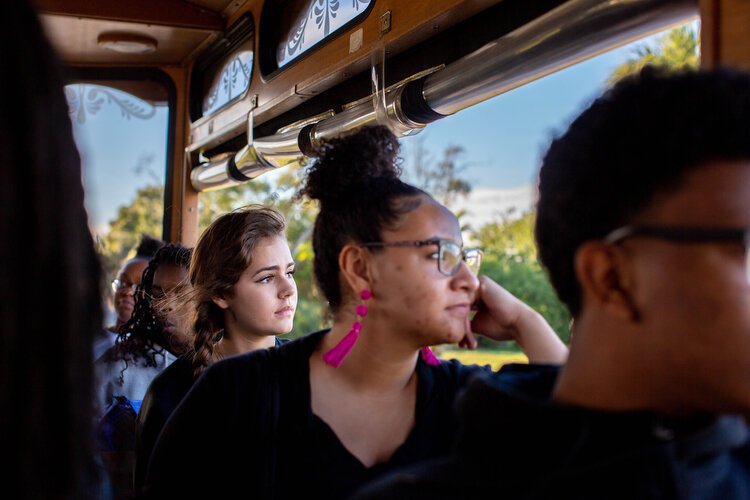
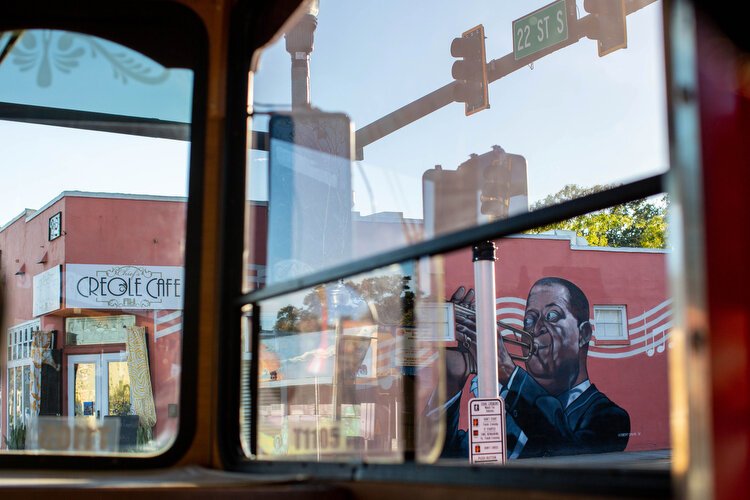
Her pink earring’s tassels blow in the wind as the open-air trolley passes vivid blue skies.
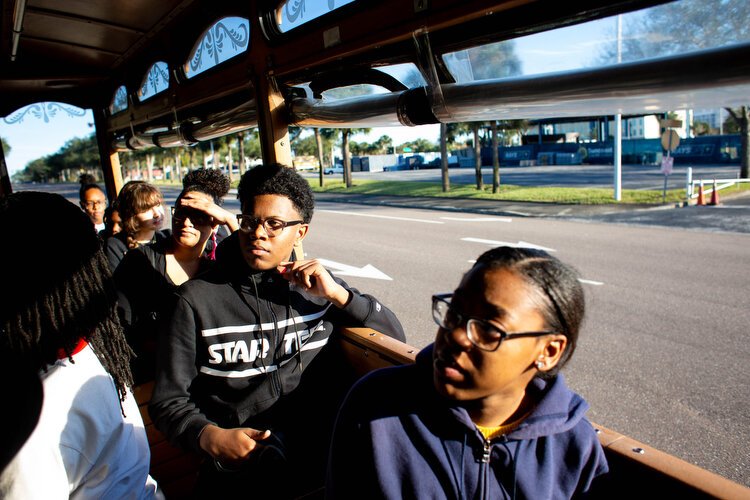
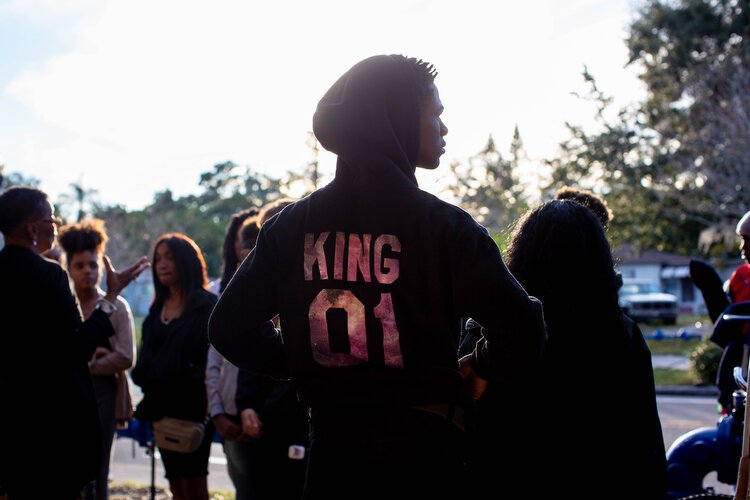
Students from Youth Farm at Enoch Davis Center ride through historical spots marking St. Pete’s tumultuous past on the African American Heritage Trail Trolley Tour, an educational tour that helps preserve the city’s otherwise hidden past.
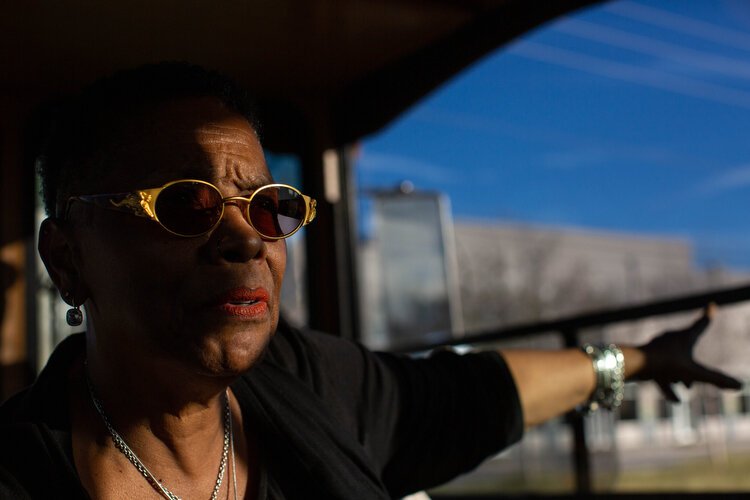
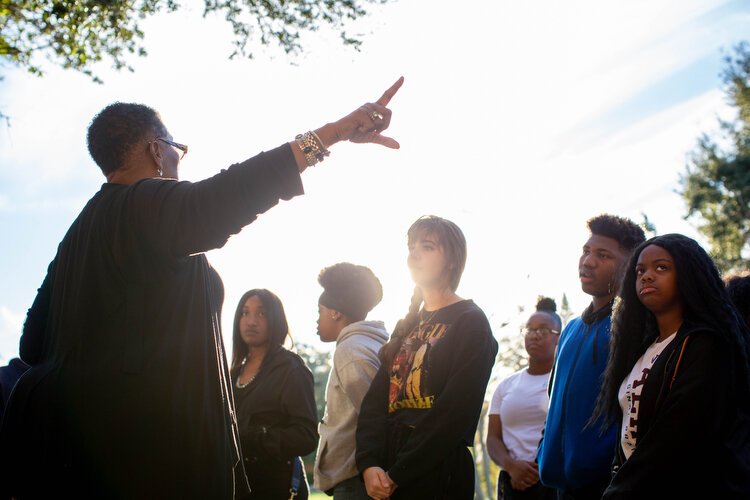
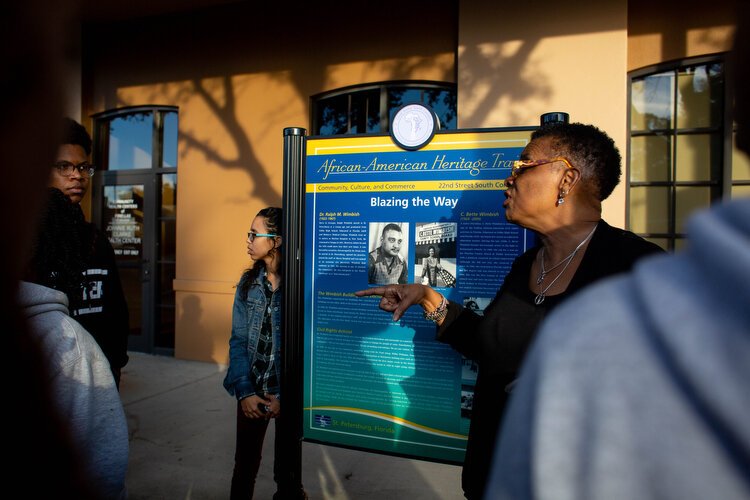
Gwendolyn Reese, President of the African American Heritage Association of St. Petersburg, looks out through her alligator rimmed gold eyeglasses, informing students about iconic locations where white city leaders pushed African Americans out of downtown as the city became a resort town. The trolley stops at the site of a lynching of an African-American man in St. Pete prior to the Civil Rights Movement.
“We can not let our stories die,” Reese says.
They pass the Tropicana, once a neighborhood called Gas Plant where 285 buildings and 500 houses were owned by African Americans. Later they were forced out to make way for parking lots and the stadium.
The trolley makes another stop at what once was the Mercy Hospital on 22nd Street South, the only St. Petersburg medical facility that served non-whites decades ago. At the time, Blacks needing medical care were neglected or turned away from other hospitals due to prejudice.
On the tour, Reece memorializes prominent individuals, including Dr. James Maxie Ponder, an African-American and the first physician to serve Blacks in St. Pete in 1926. He was the only physician to serve the community for more than a decade.
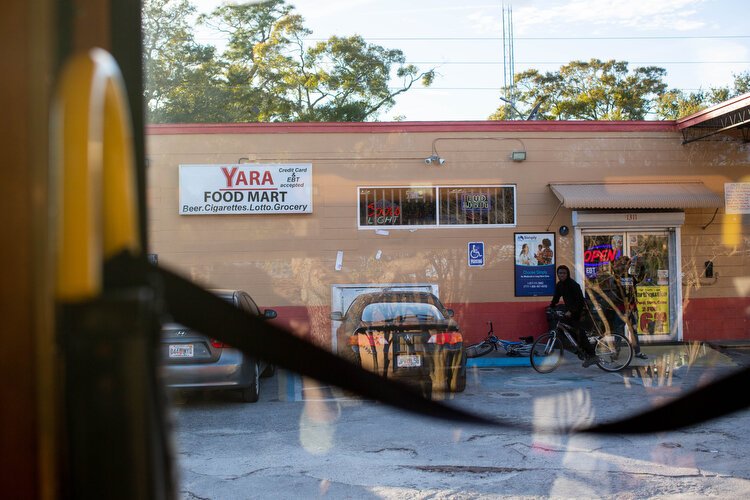
Two boys on bikes at a gas station in the south side join in to learn even though they aren’t part of the official tour. As they departed later, both hugged Reese, showing their appreciation for her mission in sharing her knowledge of local history.
For more information and to arrange a tour, visit the African American Heritage Association website.
Author

Related Articles

Safe & Sound Hillsborough launches positive alternative to teen takeovers
The #SafeSummerSeries is funded by the Children’s Board of Hillsborough County and the Hillsborough County Commission

Partner Partner Content A Woman’s Perspective on Financial Management
When it comes to financial planning and investing, women often bring a different perspective to the table than men.

Tampa’s West Riverwalk expansion rolling along
Part transportation project, part economic development catalyst, Tampa’s West Riverwalk expansion is taking shape.